
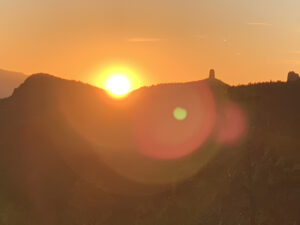
Sun setting over West Sedona. Photo by Rob Harrison
The line between Spring and Summer in Northern Arizona is never well-defined. One day, air conditioning is a necessity, and the next day requires the full force of a furnace. The extreme shifts in temperature may catch outdoor recreationists by surprise. From a hiking standpoint, now is the time to begin cultivating a survival mentality for outdoor recreating in the heat.
When does this mentality start? At home, before you even head out the door. Not having such a mindset can lead to common reasons that hikers need to be rescued in the Sedona area, including: having insufficient or improper clothing, having insufficient water, having few or no safety/survival items, not knowing the terrain for a hike, not understanding the weather conditions, and failing to recognize one’s physical limitations, as well as those of all group members.
By following the tips below, bodies, minds, and backpacks will be properly prepared for hiking in the heat. Keep in mind that the ground temperature on the trails can reach as high as 150 degrees during the peak of summer.
Get acclimated: This can be thought of as “training for summer” — intentionally exposing yourself to warm weather by getting out in it. During these May days, head out for some exercise around mid-day or early afternoon. After multiple exposures, you will notice a difference.
Have the right clothes: These include a lightweight, light-colored sun shirt and hat with a brim. Another helpful item is a moistened cooling towel (a bandana can work, too) to put around your neck; it helps draw heat away from your skin through evaporation.
A gear tip: Use a lightweight reflective umbrella, the hiking size, not the golf size. Yes, you will need to carry it, but you will hike with your upper body in the shade.
Manage hydration: Preload your system with water and electrolytes before your hike. In 90-degree temperatures, a rule of thumb is to carry one liter of water per hour of hiking, and drink frequently. Reaching the half-way point in your water is a strong signal that your hike should also be at or beyond its half-way point. If you hike with a bladder instead of water bottles, knowing where your water level is becomes very important.
Don’t take hot-weather risks: Know exactly where you are going, what your distances are, and have a good estimate of your time on the trail. Hiking early and ending by mid- to late morning is an excellent way to avoid the heat.
Carry extra resources for others: You may meet hikers who have made a hot weather miscalculation and can offer them water, electrolytes (also salty snacks are good to have along), and sugar, like hard candy or an energy bar.
Be aware: Be cognizant of heat stress you or your hiking partners might be experiencing. The continuum from being uncomfortable to heat exhaustion to heat stroke can have fatal outcomes. Heat exhaustion typically starts with a headache and light headedness. Seek shade, take frequent sips of cool water and apply cool water compresses. Untreated, exhaustion can progress to heat stroke with a rapid rise in body temperature to 106 degrees or greater. The hiker can become confused with slurred speech with or without profuse sweating. Call 911 immediately, seek shade, and offer cool water and cool compresses until help arrives.
For several years, Friends of the Forest volunteers have performed Preventive Search and Rescue (PSAR) efforts at Dry Creek Vista Trailhead (leading to Devil’s Bridge) and Bell Trailhead (leading to The Crack at Wet Beaver Creek). PSAR activities encompass interacting with trail users to gauge how prepared they are for their hike, and if appropriate, to provide suggestions for safer options, such as going earlier in the day, and/or picking a different, less strenuous hike. Volunteers also provide hands-on aid (including shade, water, ice, and electrolytes).
For more information on Friends of the Forest’s PSAR program and other volunteer opportunities, visit www.friendsoftheforestsedona.org.
For happy trails this summer, implement a survival mentality ahead of your hike, which will help you prepare well and stay safe!

Author, Melissa Pontikes
Serving Sedona, written this week by Melissa Pontikes, Friends of the Forest, appears Wednesday in the Sedona Red Rock News.